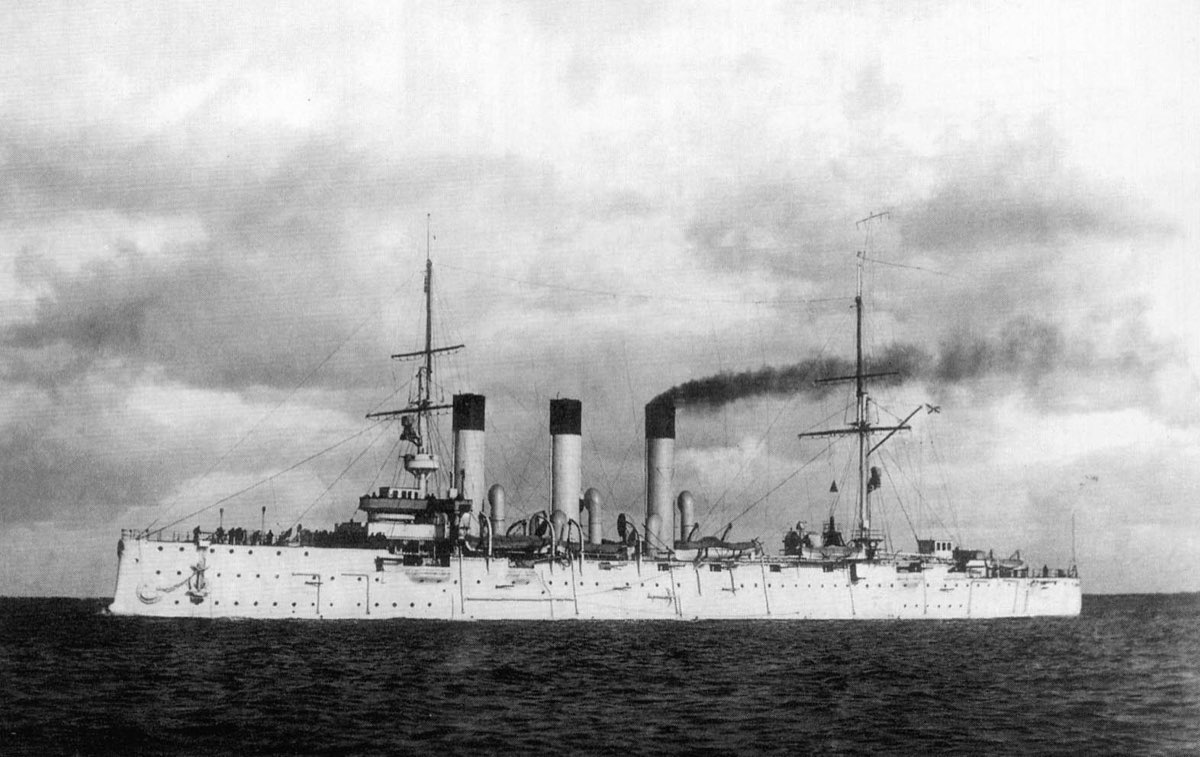
October 21, 1904. The Russian 2nd Pacific Squadron was sailing through the North Sea on its way to fight Japan. The voyage was 18,000 miles. The officers were exhausted and paranoid. Intelligence reports — almost certainly fabricated — claimed Japanese torpedo boats were operating in European waters.
Then lookouts spotted small vessels in the dark off Dogger Bank. The battleships opened fire.
The targets were British fishing trawlers from Hull.
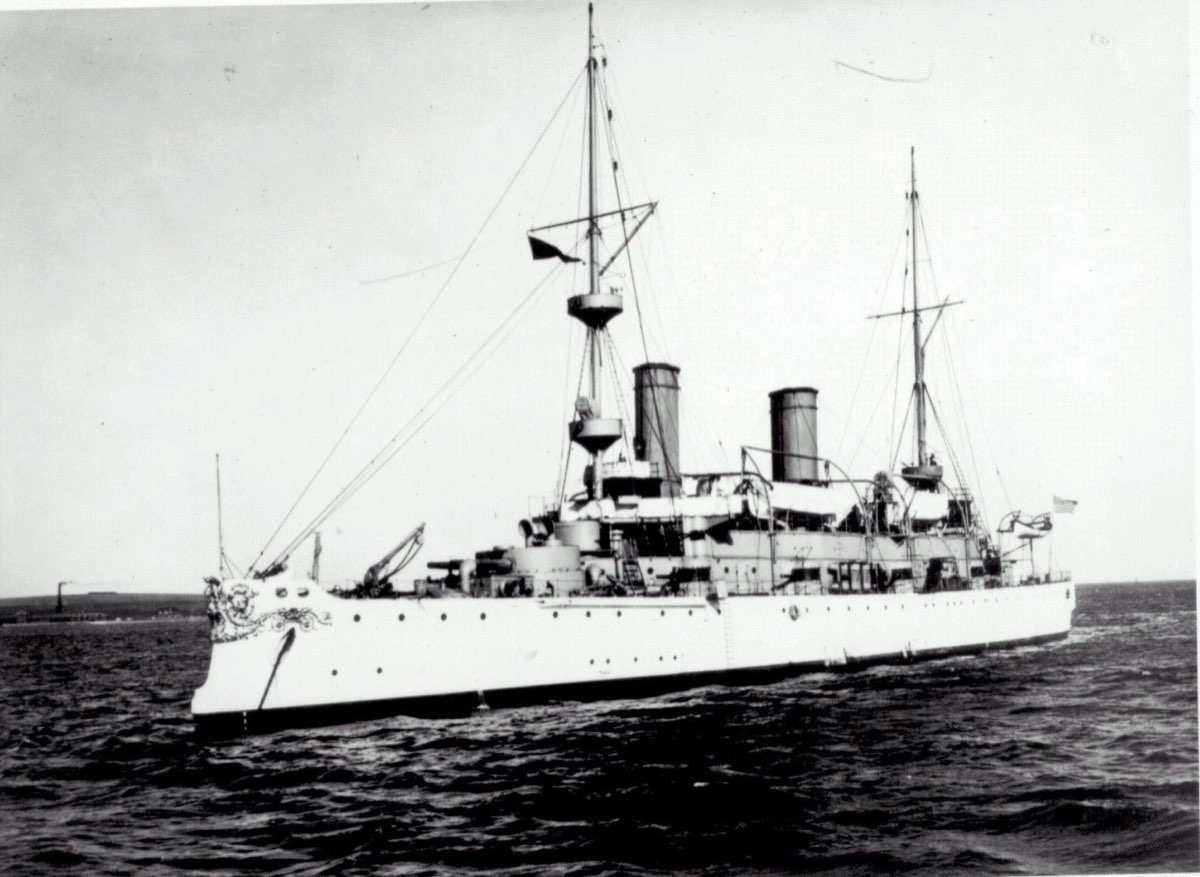
Aurora was sailing ahead of the main squadron. The battleships behind her couldn’t tell the difference between a Russian cruiser and a Japanese torpedo boat. She took several hits from her own fleet. The ship’s chaplain was killed. At least two sailors were wounded.
The trawler Crane was sunk. Two British fishermen died. Six more were wounded.
Britain was furious. The Royal Navy mobilized its Channel Fleet and Home Fleet. War between Russia and Britain suddenly seemed possible — over a fishing incident. The crisis went to an international tribunal at The Hague, which ruled Russia was at fault. Russia paid 65,000 pounds in compensation.
The squadron sailed on. Seven months later, Aurora reached the Battle of Tsushima. Captain Yegoryev was killed by a shell fragment during the battle. The cruiser took around ten hits, with roughly eighty wounded. She broke away from the catastrophic Russian defeat and limped to Manila, where the Americans interned her until the war ended.
Aurora went home.
Thirteen years later, on the evening of October 25, 1917 (Old Style calendar), Aurora was moored on the Neva River in St. Petersburg. Her crew had sided with the Bolsheviks. At 9:40 PM, she fired a single blank round from her bow gun.
That was the signal. Red Guards and soldiers began the assault on the Winter Palace. The Provisional Government fell. Soviet historians turned that one blank shot into the founding myth of the revolution. The reality was less dramatic. The “storming” was more of a gradual walk-in. But the shot became iconic.
Aurora never left Russia again. She’s been a museum ship since 1957, permanently moored on the Bolshaya Nevka in St. Petersburg, near the Nakhimov Naval Academy. Not every Russian warship from that era got such a dignified retirement — the Varyag ended up as a floating casino before becoming an aircraft carrier. She underwent a full restoration from 2014 to 2016. She still flies the Russian naval ensign.
One ship. Friendly fire, Tsushima, a revolution, and a permanent address.
Sources
- Pleshakov, Constantine. The Tsar’s Last Armada: The Epic Journey to the Battle of Tsushima. Basic Books, 2002.
- Hough, Richard. The Fleet That Had to Die. Birlinn, 2003 (revised edition).
- Wikipedia: Russian cruiser Aurora — operates Aurora as a branch museum.
- Scott, James Brown. The Hague Court Reports. Carnegie Endowment for International Peace, 1916 — documents the Dogger Bank Commission ruling.
- Wikipedia: Dogger Bank incident